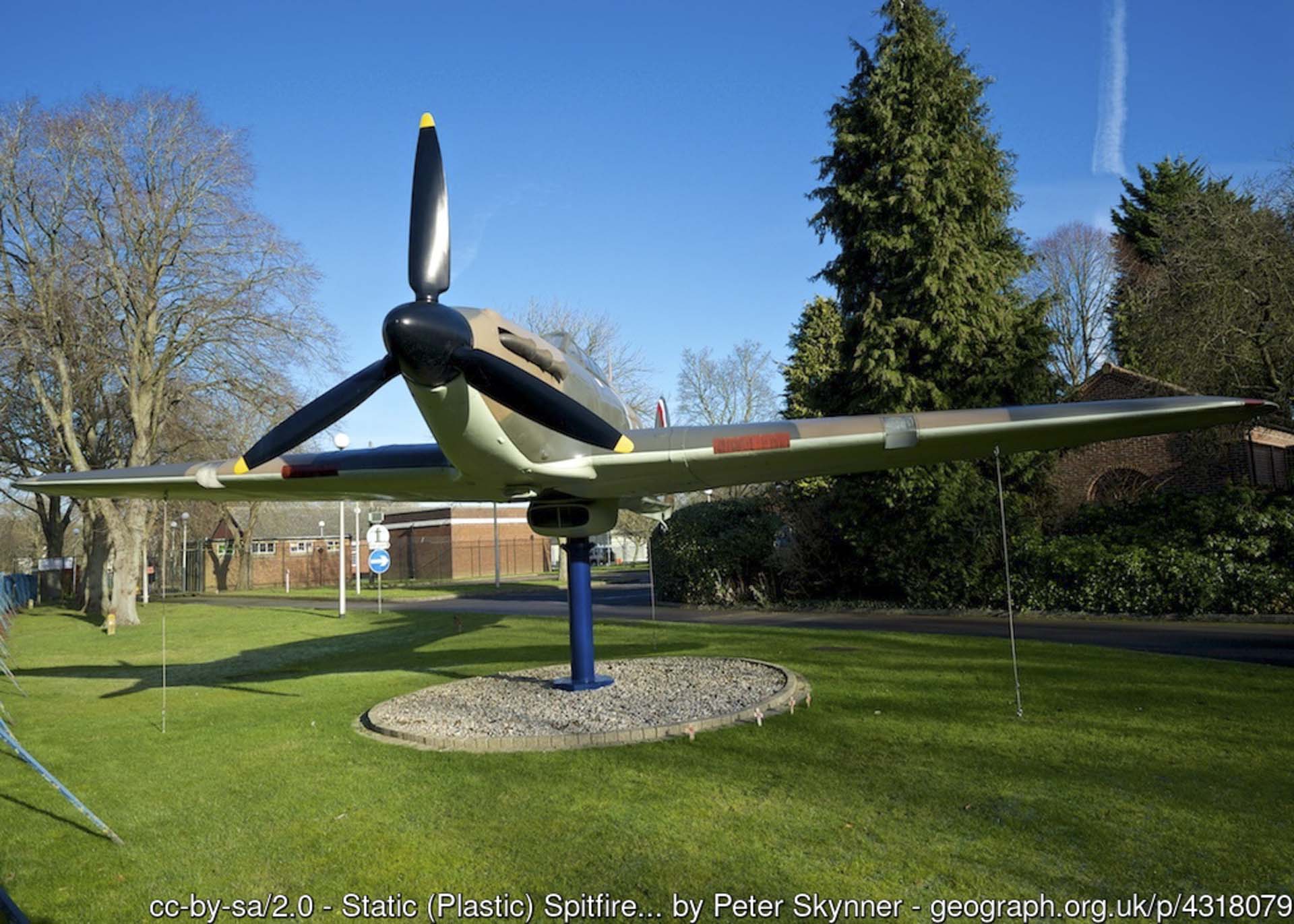
Of course, for most people the defining period when we heard the words “Biggin Hill” is the Second World War, and especially the Battle of Britain.
The aviation history of Biggin Hill began in 1917 during World War I when the Royal Flying Corps established an airfield there. After the war, the airfield was used for civil aviation, and in the 1930s, it became a popular destination for pleasure flights and air shows.
Biggin Hill played a crucial role in the defense of Britain during World War II. The Royal Air Force (RAF) took over the airfield and established it as a fighter station. It became one of the principal bases for the RAF’s fighter command, defending London and the southeastern region from German Luftwaffe attacks during the Battle of Britain in 1940. The airfield saw intense air battles and sustained significant damage during the war.
Postwar, Biggin Hill continued as an RAF base, home to the UK nuclear deterrent, until being decommissioned in 1992 after which the airfield was developed as a civilian hub.