


Quartz Worktops - Hugely Popular - As Ever!
Quartz worktops were just beginning to come into the UK market when I came into the industry 16 years ago…
… and their popularity has only grown over these years. I am guessing that around eight to ten years ago quartz worktops overhauled granite in popularity and in volume for AG. Today a large proportion of kitchen worktops we install are quartz, with granite, ceramic and marble worktops coming in second, third and fourth places. The solid stone worktop market itself has grown, and within that quartz worktops have taken a massive share.
Against that backdrop, it may seem strange that many of the leading quartz manufacturers seem to be bending over backwards to avoid using the word quartz in their own product descriptions. Why is this? Obviously for some there is a desire to promote their brand as a unique, not generic item – “this isn’t quartz, it’s Silestone!” – and so on, but why are others seemingly happy to use other, less well-known generic terms like “engineered stone” “mineral surface” and so on?

Quartz Worktops - Why "quartz" anyway?
“Quartz” was always a bit of a daft name.
The word quartz really refers to a specific mineral, Silicon Dioxide, found both in pure form (think “quartz crystals”) and mixed with other materials in many, many naturally occurring rocks. Walk on a non-tropical sandy beach and you are likely to be walking on more or less pure quartz.
“Quartz” worktops are not pure quartz. They are usually made with about 93% mineral content – and traditionally largely quartz as defined above – held together with around 7% plastic resin. Calling them “quartz” is a bit like calling a puttanesca sauce, “tomatoes.” It may be a main ingredient, but you wouldn’t ever do that…
Anyway, someone used that term, and the name stuck. Under the name “quartz”, this kind of engineered stone has become a global commodity with a massive manufacturing base. Silestone alone have factories on five continents. It has been colossally succesful, going from invention to domination in around 30 years.

Quartz Worktops - Taking the quartz out of quartz
Not so dusty…
We have written more than once about the dangers of dust in quartz worktop manufacture, here and here, for instance. It is specifically the Silicon Dioxide – the crystalline silica – content of quartz worktops that can be problematic. Don’t panic – there is ZERO danger once quartz worktops are installed in your home, or when you are on the beach – but there are serious issues in worktop fabrication unless precautions are taken.
The use of water, extraction systems and protective gear are all weapons in our armory to keep our fitters safe. AT AG we were even involved in the launch of our industry’s standards and safety body – the Worktop Fabricators Federation – WFF – to self-regulate and push standards up.

One further weapon is something we worktop fabricators/installers can’t do – but the material manufacturers can. That is to REDUCE the silicon dioxide content in their product. In other words, they can make “quartz” with less quartz in it. In some cases they have reduced from over 80% down to under 5% (figure for Quartzforms Ecotone™ products).
That is impressive, and has involved a lot of research and development. Not surprisingly, especially when some governments are even considering banning “quartz worktops”, these manufacturers want to distance their new, low silica products from traditional quartz – and so they avoid using the word. This is where older, broader terms, like “engineered stone” or “minieral surfaces” are brought into play, or, in some cases, in-house words and phrases (such as Silestone’s Hybriq+®) are used. Anything to avoid calling it… quartz.
Quartz Worktops - What's in a name?
What’s in a name – does it matter, whether or not we call them “quartz worktops”?
At one level, no, it doesn’t matter very much. The name quartz has been used widely and it seems to have huge staying power. Let’s face it, “quartz worktops” may well be the phrase you googled that brought you to this article!
And these new engineered stone or “Mineral” surfaces DO contain resin and have the same applications as “quartz”. They are fabricated by us in exactly the same way and have the same working properties as a quartz worktop. One doesn’t need to seal them but one must protect them from heat and strong chemicals.
So we won’t be ditching the phrase altogether from this website. But we try to use terms like engineered stone for accuracy and to honour the huge strides the manufacturers have made in removing quartz from quartz. We think that is fair and right.
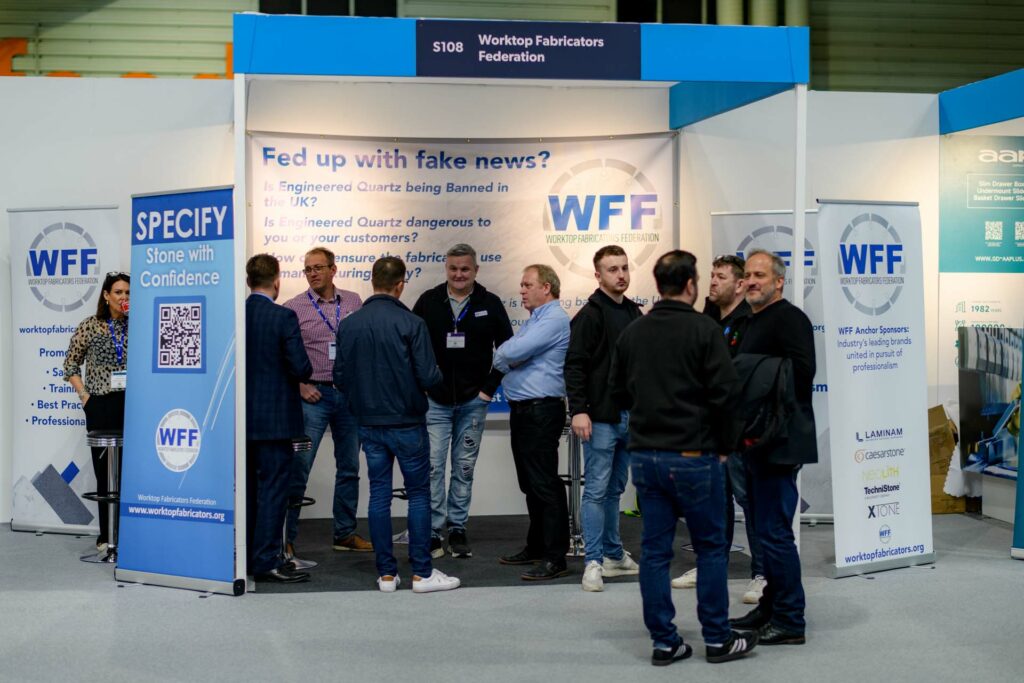
And for you, the customer, it pays to be conscious of the issues. Although quartz worktops in the home pose no danger, as the main contractor involved in your kitchen worktop installation, you are obliged to ensure that good health and safety standards are maintained in the fabrication and installation of your worktops. Consider only using a company on the Worktop Fabricators Federation members list – and if you are in the South East, give us a call!
We are Affordable Granite, the leading installer of quartz of all kinds worktops in Surrey, Sussex and across the South East. If you have any questions about the technical terms used here, or about the dangers and challenges of working with materials containing crystalline silica, feel free to call. It is easy to contact us on 01293 863992 or by email on [email protected]/ .
