


Is This the End for Quartz Worktops?
Silica Dust, Safety, Changing Products and New Names
For years, quartz worktops have been a firm favourite with homeowners, kitchen designers and fabricators. Combining attractive designs, consistent quality, durability and relatively low maintenance, engineered stone has become a major player in the kitchen and bathroom market. However, growing concerns over respirable crystalline silica (RCS) dust have put the industry under increasing scrutiny. Does this spell the end for quartz worktops, or are we simply witnessing a significant transformation in how worktops are manufactured, fabricated and sold?
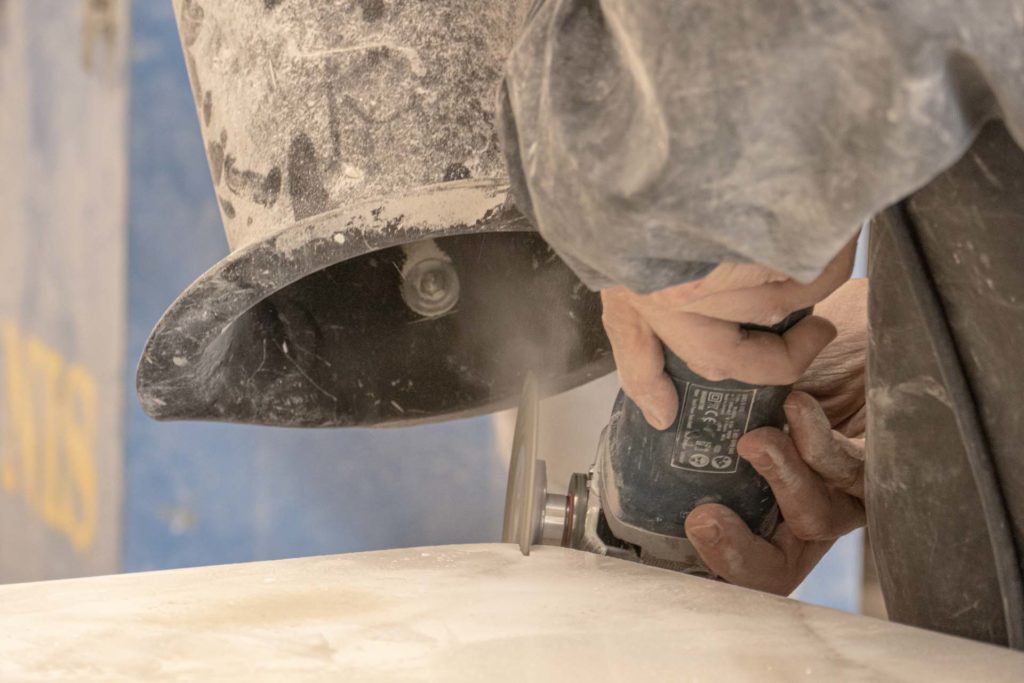
Dust formed during dry cutting of quartz
The Silica Dust Challenge
At the heart of the debate is crystalline silica, a naturally occurring mineral found all around us and in many types of building material, including quartz worktops. When brick, concrete, tile or quartz slabs are cut, ground or polished, particularly without effective controls, fine airborne dust containing crystalline silica can be released. If inhaled in quantity and over time, these tiny particles can cause serious and potentially irreversible lung diseases, including silicosis. Well-publicised deaths in the UK and elsewhere have drawn public attentioon to this serious issue.
The risks are particularly associated with fabrication processes in enclosed workshop and factory spaces. This is where slabs are cut to size, openings are created for sinks and hobs, and edges are shaped and finished. Dry cutting and grinding especially can generate high levels of airborne dust.
The issue is not simply a matter of individual responsibility. It requires manufacturers, distributors, fabricators and installers to examine the entire supply chain and ensure that workplace practices meet the highest applicable safety standards.
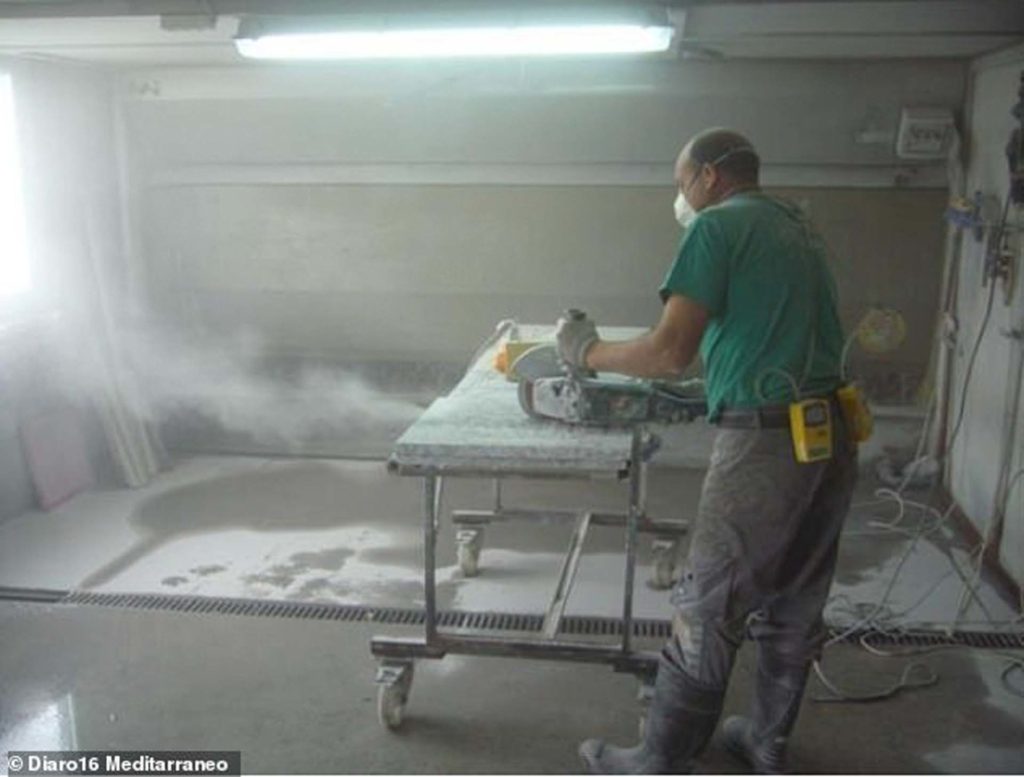
Poorly regulated and dangerous workshops have claimed lives around the world.
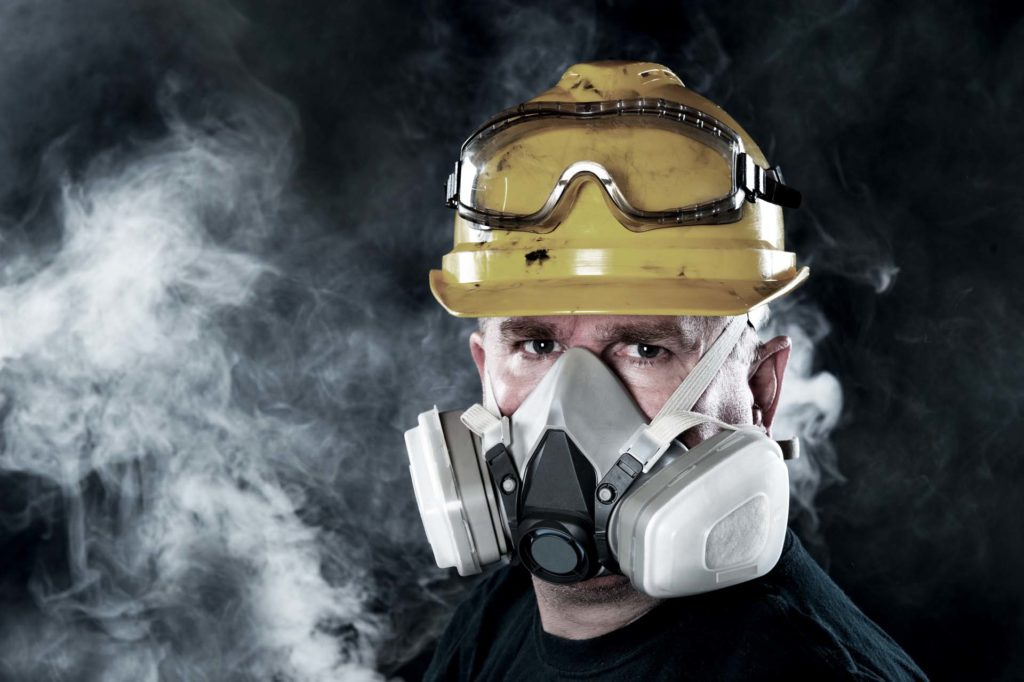
PPE Is Valuable, but It Is Not the Whole Answer
Personal protective equipment (PPE), including suitable respiratory protective equipment (RPE), has an important role to play. However, masks alone cannot make an unsafe working environment acceptable.
Effective dust control starts with eliminating or reducing exposure wherever reasonably practicable. This means using wet-cutting techniques, effective local exhaust ventilation where suitable, well-maintained extraction systems and thorough housekeeping procedures.
Employers must also ensure that workers receive appropriate training, exposure risks are assessed, equipment is properly maintained and suitable respiratory protection is selected, fitted and used correctly. Health surveillance may also be required, depending on the nature and level of exposure and the applicable regulations.
In the UK, businesses should follow the relevant Health and Safety Executive (HSE) guidance and their legal duties under applicable health and safety legislation. Good practice is not merely about ticking boxes; it is about building a culture in which worker safety takes priority over speed, convenience and production targets.
Recent moves (May 2026) by the Health and Safety Executive to inspect and apply stringent safety standards in our industry were significantly preempted (2020) by the formation of the Worktop Fabricators Federation. In an industry where irresponsible fabrication and the disease it can cause threaten the livelihoods of serious and responsible companies, we began working together to raise awareness and safety standards. The founder companies (including Affordable Granite) were already working to a high standard in health and safety. It made total sense to coordinate with like-minded businesses and establish industry standards that customers could look for if they cared about the working conditions that lay behind their quartz worktops. Putting it bluntly, high standards cost money, none of us likes being undercut by cowboys, and the WFF logo now marks out the quality firms who carry the cost of caring.


When "quartz" isn't "quartz" - a changing product
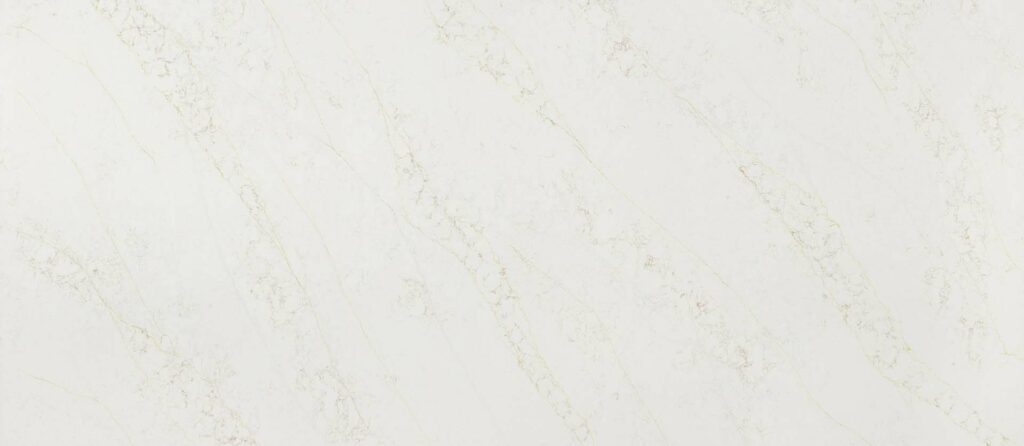
New Era Gold – part of Quartzforms Ecotone range
At the same time that fabricators were starting to work together on improving safety standards industry-wide, the quartz worktop manufacturers were also changing the composition of their products. Caesarstone, Quartzforms and Cosentino, with their Silestone Hy-Briq range, and later their Éclos products were, as ever, in the forefront, but right across the board low-silica is in. Even the generic, inexpensive worktop manufacturers are pushing hard on this, so that we are now viewing lower silica levels across the board.
It is important to maintain perspective on this. Reduced silica doesn’t mean “no silica”, and alternative materials may also create potentially dangerous dust – not least the polymer binder itself. Good practice, with wet-cutting and the use of PPE is still essential. Caesarstone have been incredibly supportive in this with their “Master of Stone” training and qualification scheme, which all of us at AG have gone through.
Because “quartz” – a daft word in the first place – is associated so strongly with silica, the manufacturers have understandably wanted to distance their new products from the old “quartz worktops”. Some have done this by also creating new brands – like Caesarstone Mineral, Cosentino Éclos or Quartzforms Ecotone – but all are anxious not to use the words “quartz worktops” any more. We think that this is now gaining momentum, and we are likely to use the phrase “engineered stone” far more in future, as well as the brand labels of the big manufacturers.
But a new name doesn’t necessarily mean a safer produict, and in some ways the scene is now much more confusing, with materials needing to be checked for the crystalline silica content on a one by one basis, rather than generically. Good information and controlled provenance are now at a premium in our industry alongside safe working practices and quality control. If in doubt, ask us!

Cosentino Éclos Wondr
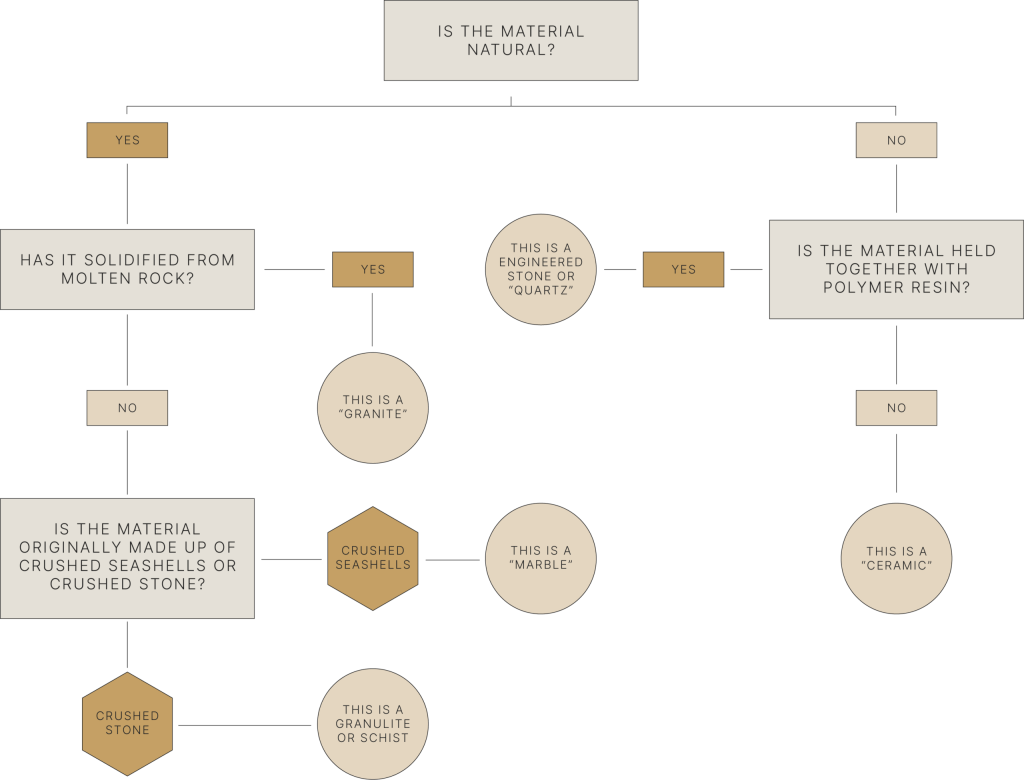
To simplify the whole stone worktop scene, and clarify what we do: we fabricate kitchen worktops from –
- Natural Stone – commercial granite and marble – these may include schists, dolomuites, quartzites, syenites, labradorites and many more – but they are all natural and come out of the ground!
- Engineered “stone” – materials which are bonded together in a factory using polymer resins – what used to be called “quartz worktops” but which may now have far reduced crystalline silica content
- Ceramic/sintered “stone” – materials which are bonded together in a factory using heat or pressure or both
We have written elsewhere and often about the relative benefits of these types of material, and of others which we don’t sell.
So is this the end for quartz worktops?
Is the UK going to ban “quartz worktops”, following the lead of Australia and California? We doubt it. By the time any legislation is enacted here, no worktops will be called quartz worktops anyway! In addition, the UK government is aware that those bans had unintended effects, not least a rise in the use of natural quartzites, which have an even higher silica level than “quartz” worktops!
So the end may not come due to a ban, but because the components of the materials are changing, and so is the terminology. You may not hear the phrase “quartz worktops”, but similar products will still be on sale. What will always matter to the consumer is the quality of the installation and (for those with a conscience) the safety and well-being of the workers involved in making and installing your worktops. Good health and safety practices are still vital and always will be, whatever we call what we are cutting.
You can trust Affordable Granite to do it right, whatever kitchen worktop material you choose.

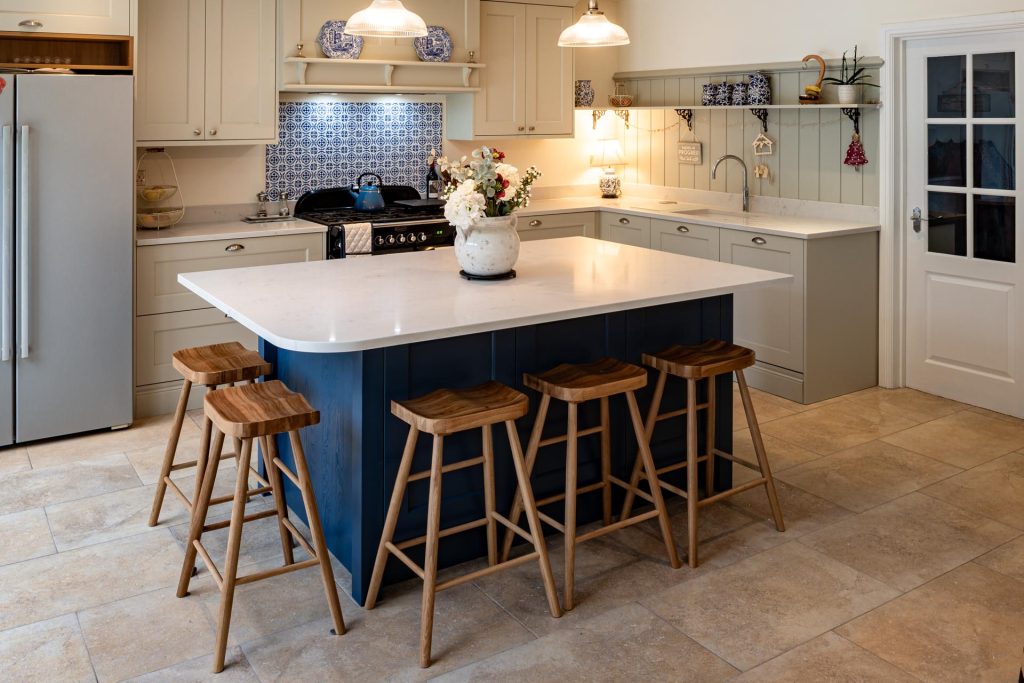
Just perfect – a kitchen fitted with Venetian River engineered stone worktops
You can trust Affordable Granite to do it right, whatever kitchen worktop material you choose
We are Affordable Granite: If you want to enquire about granite worktops, quartz islands, ceramic peninsulas or any other aspect of solid stone installation, please feel free to contact us on 01293 863992 or [email protected]
Images copyright © Andrew King Photography or from suppliers
