


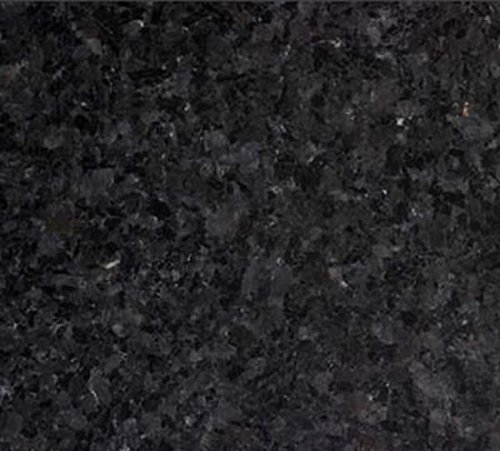
What are ceramic worktops made from? Unlike granite or marble, ceramic is man-made, like engineered stone or “quartz”. And, like quartz, it can contain a variety of materials, generally in powered form. Ceramic worktops are generally made from a mixture of natural minerals, including clays and real quartz, and man-made secondary materials, like glass.
STOCK GRANITE COLOURS
Bespoke Granite Colours
Case Studies
Frequently Asked Questions
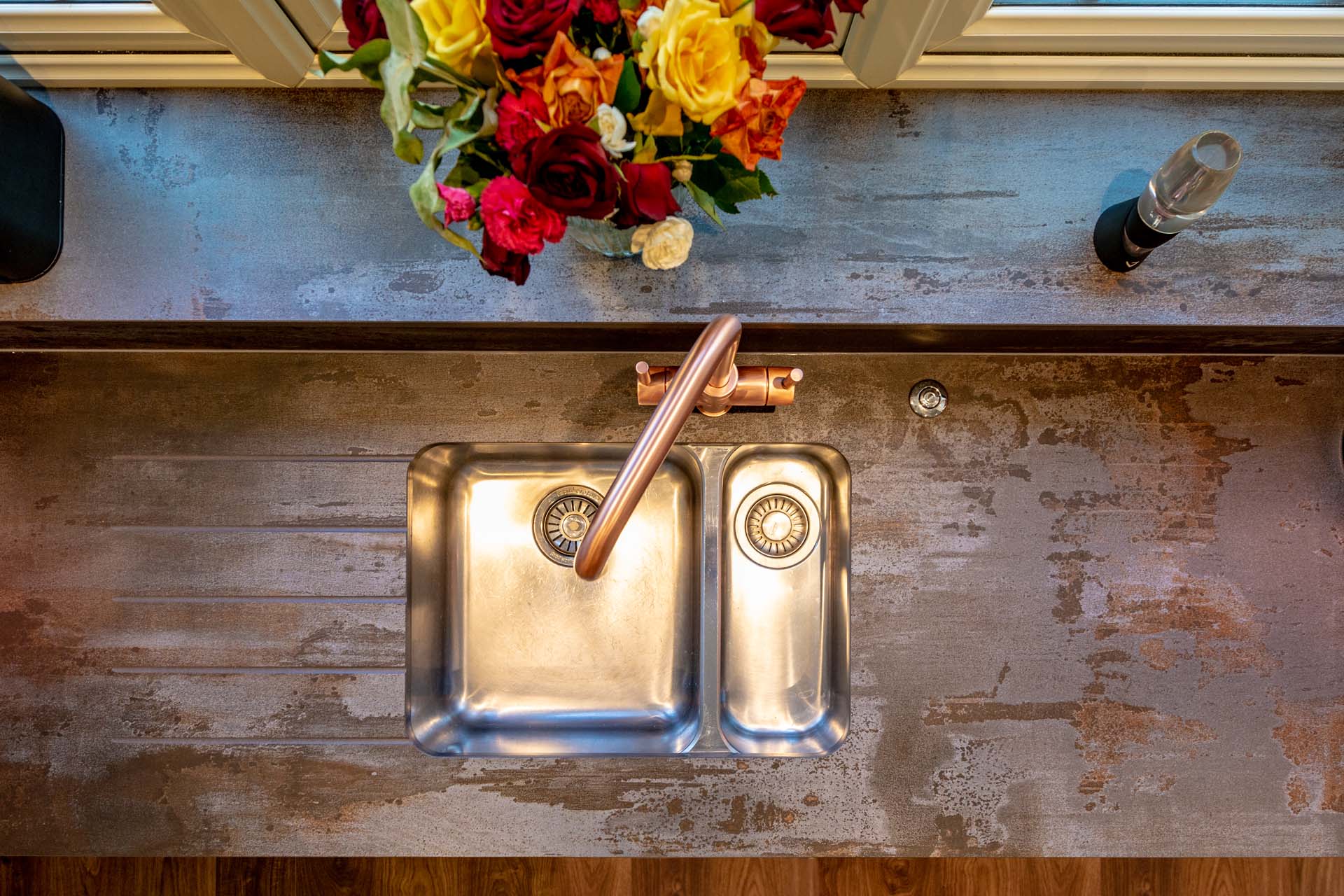
Dekton
Dekton in a Sussex kitchen
What are ceramic worktops made from?
Ceramic materials - the magic of heat and pressure
How is the mixture held together? The key difference between “quartz”/engineered stone and ceramic materials is right here. Quartz is held together with around 7% plastic resin. Ceramics are held together with heat and (in some cases) pressure. This is just like making earthenware, bone china or porcelain – in fact some worktop materials are marketed as porcelain.
Dekton always claims a unique place in the range of ceramic materials because its makers, Cosentino, emphasise massive pressure more than temperature in its manufacture.
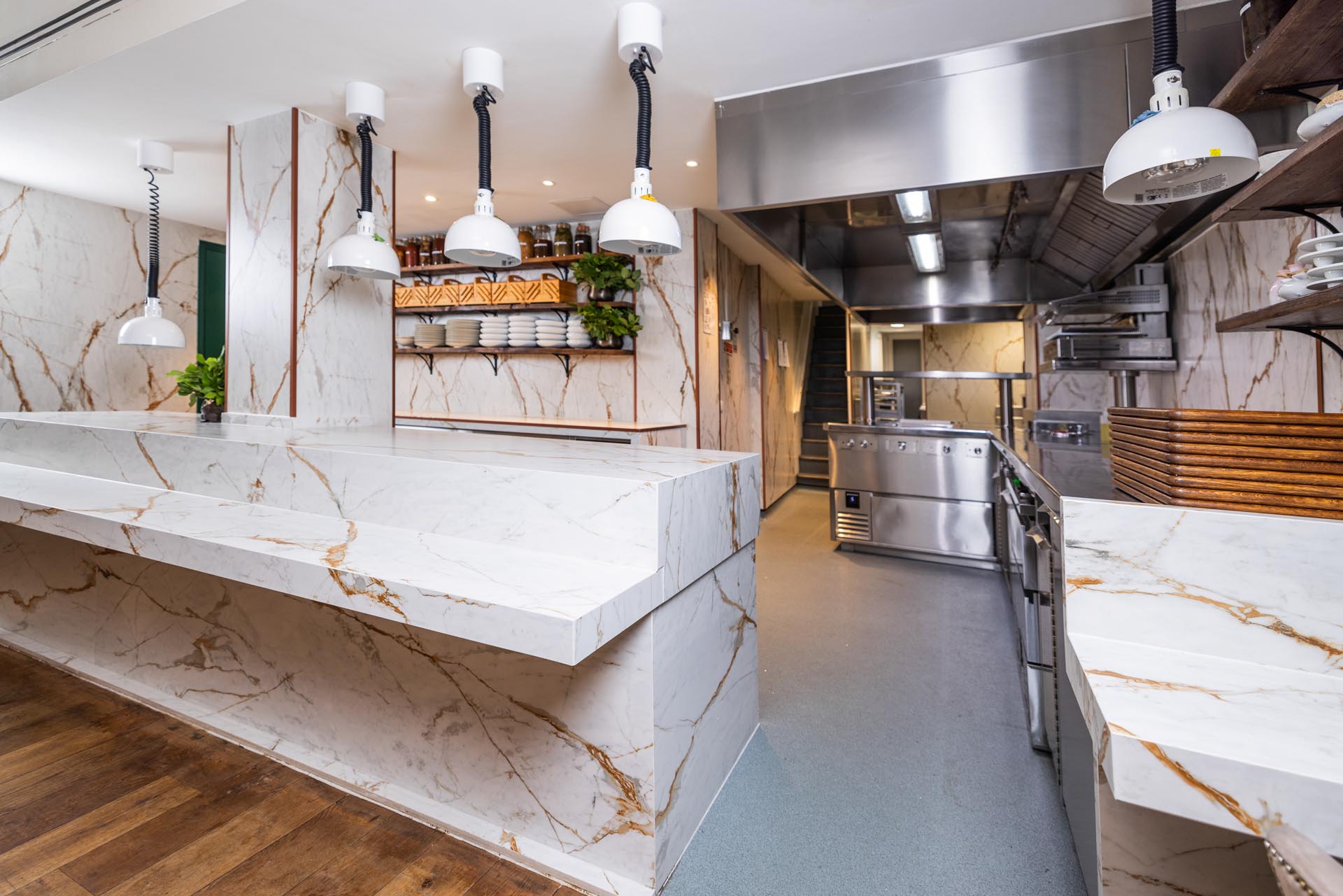
Dekton Reverie
in a top restaurant kitchen
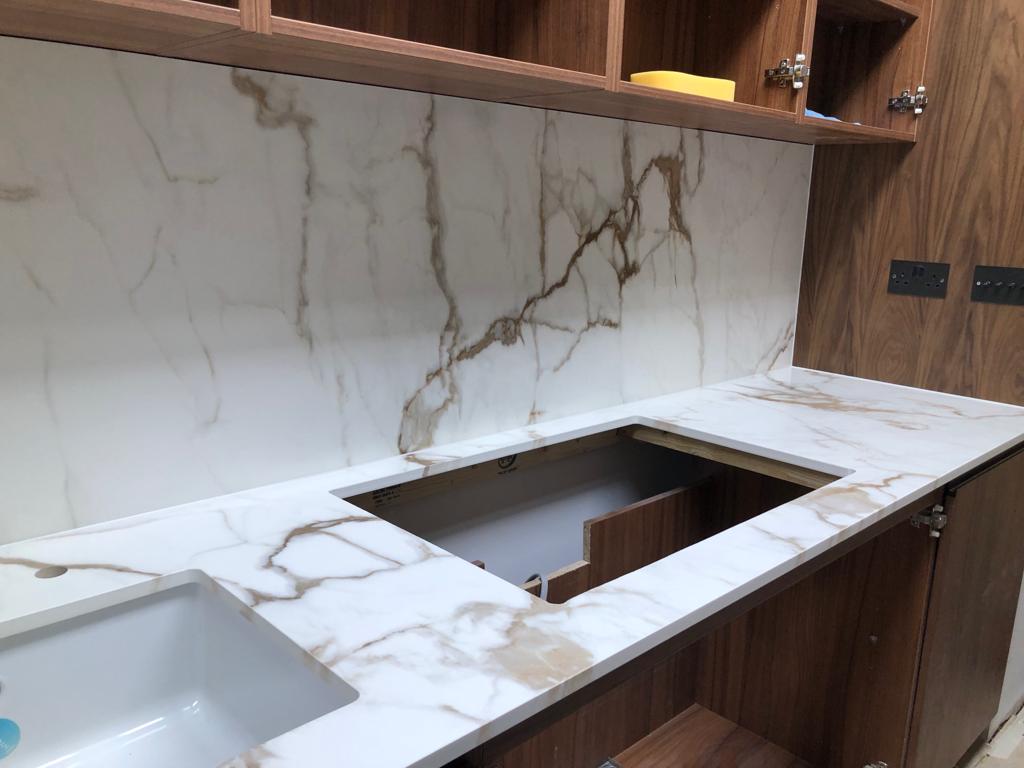
Sapienstone
Calacatta Macchia Vecchia
What names are used for ceramic worktops?
Ceramic worktops are produced by many companies and sold under many brands. Names to watch for are Dekton, Neolith, Laminam, Sapienstone, Florim and Uniceramica. Some of those will claim that their product is different or unique, because of its manufacturing process, but in all cases you are looking at materials which have been fused together by heat/pressure, rather than stuck together with resin/glue.
More complicated are the technical terms that the brands use to describe their products. “Ceramic” and “porcelain” sound fairly straightforward, but several manufacturers use “sintered particle technology” to refer to the pressured slab formation that they use.
Are ceramic worktops any good?
As we cover in our “no one magic bullet” article, all worktop materials have their pros and cons. But concentrating on ceramics:
They are exceptionally good when it comes to:
- heat resistance (hot pans straight from the oven!)
- scratch resistance (super hard surfaces)
- stain resistance/cleaning
They can be less good when they suffer impacts from hard and heavy objects. As you might expect when using a china plate as a worktop, what ceramic achieves in the above advantages comes at the price of some brittleness.

Uniceramica Basalto Grigio
one of our stock ceramics